


_large.webp)


_block.webp)


Technological Reconstruction of Historical Estonian Linen Fabrics
Historical museum textiles preserve the final result of traditional weaving, yet they rarely reveal the technological decisions behind their production. This research investigates the historical weaving technology of Estonian linen fabrics through the analysis of original museum textiles and their experimental reconstruction. The objective is not merely to reproduce the visual appearance of historical fabrics, but to understand and reconstruct the technological principles that determined their original structure, behaviour and use.
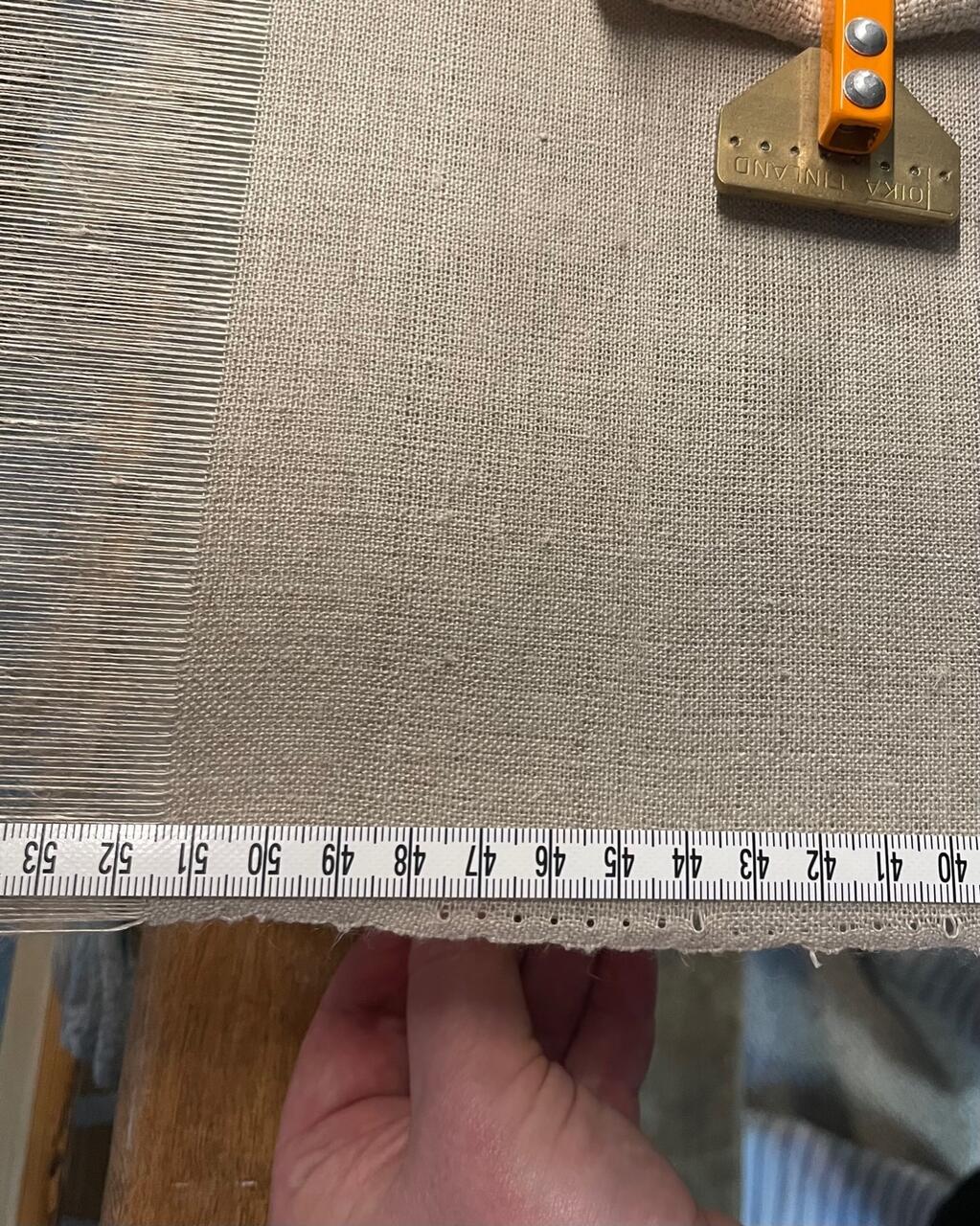
The research focuses on the analysis of weave structures, yarn characteristics, warp and weft density, fabric dimensions, shrinkage and finishing. Particular attention is given to the relationship between fabric density and the proportions of embroidered decoration. Even small deviations in warp or weft density alter the scale of embroidery, garment dimensions and the visual balance of decorative elements. For this reason, the accurate reconstruction of fabric density is considered one of the most important stages in reconstructing historical weaving technology.
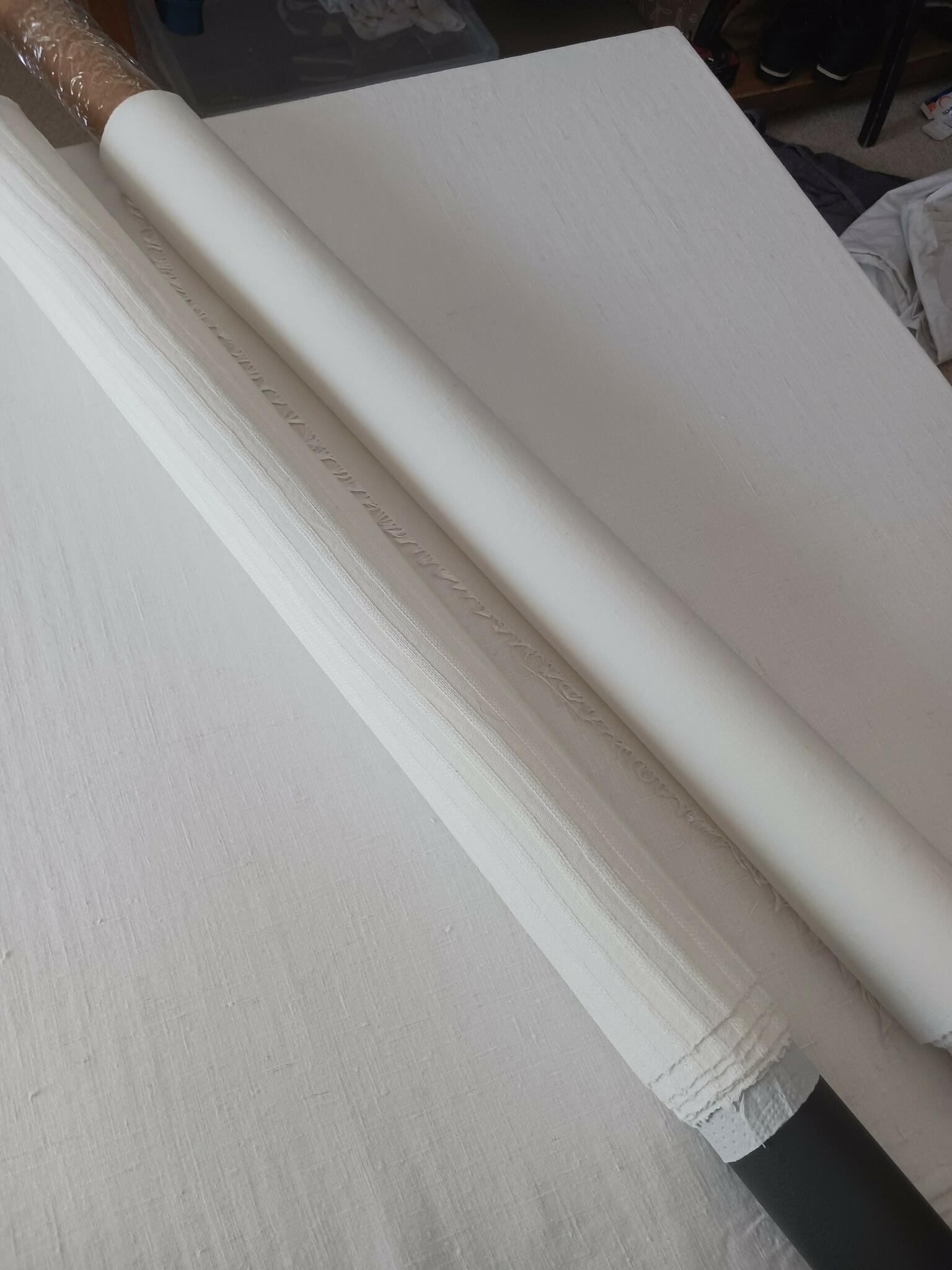
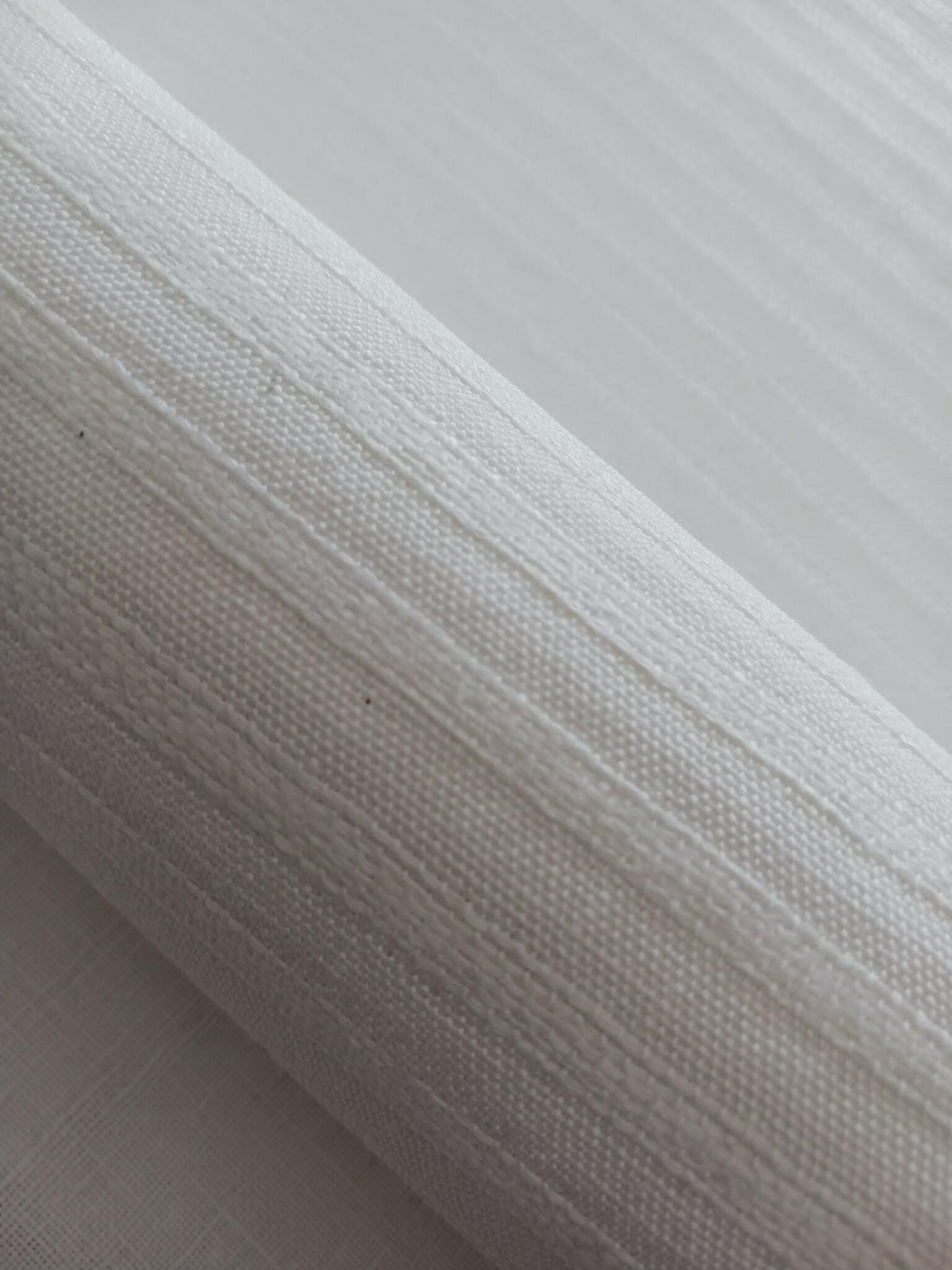
Experimental weaving forms the core of the research methodology. Original museum textiles are analysed and reconstructed through a series of weaving trials using different yarns, sett densities and weaving parameters. Rather than producing a single reconstruction, multiple experimental fabrics are woven, measured and evaluated. Each reconstruction is continuously compared with the original museum textile throughout the research process, allowing interpretations of the original weaving technology to be refined and verified.
A significant part of the research investigates the behaviour of linen fabrics after weaving. Numerous washing and finishing trials have been carried out to reproduce the dimensional behaviour and shrinkage of the original textiles. These experiments demonstrate that matching the visual appearance of a fabric alone is insufficient; the reconstructed textile must also respond to finishing in the same manner as the original museum object.
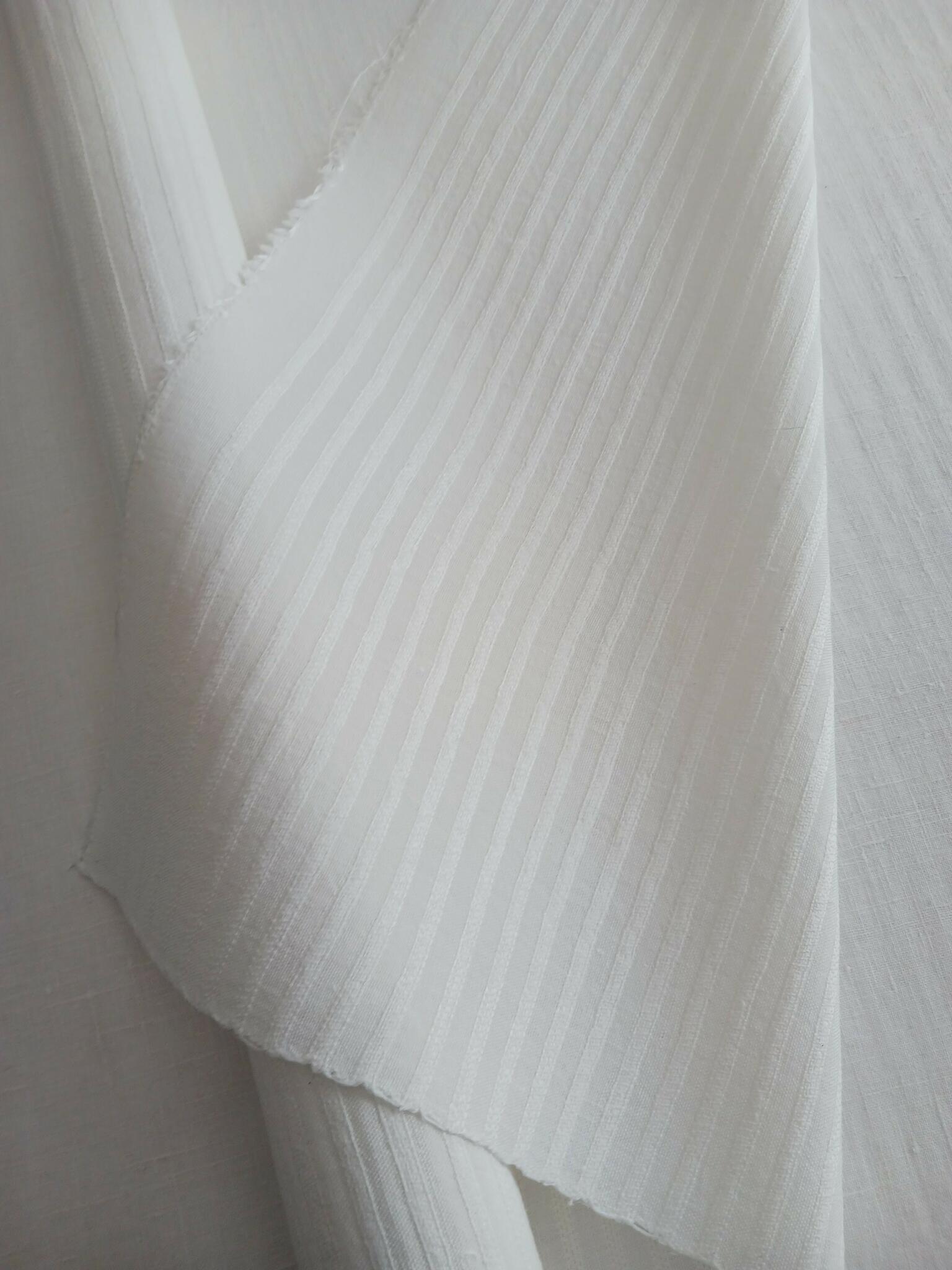
The research further examines practical finishing methods capable of reproducing the appearance and structural characteristics of historical linen fabrics. Experimental bleaching and washing procedures, using primarily modern finishing agents, were developed not to recreate historical bleaching techniques themselves, but to achieve results comparable to the original textiles while significantly reducing the time required for reconstruction. These studies were carried out in collaboration with Svetlana Saare.
Another important aspect of the research concerns the dimensional stability and straightness of linen fabrics after washing. Different finishing methods have been tested to determine how reconstructed fabrics can be stabilised and straightened while preserving the structural characteristics observed in the museum originals. The aim is to develop practical, repeatable finishing methods that consistently produce fabrics comparable to historical examples.
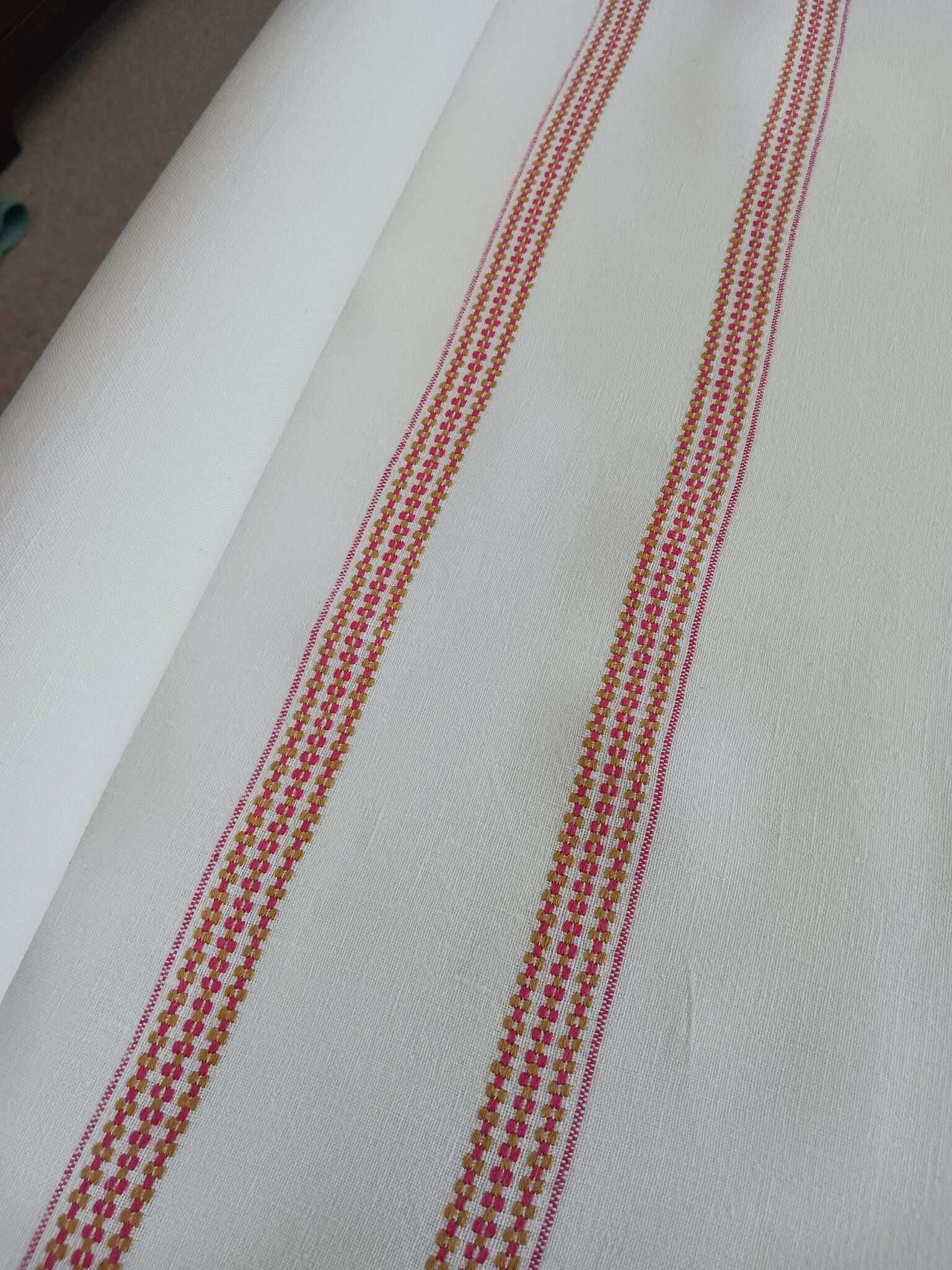
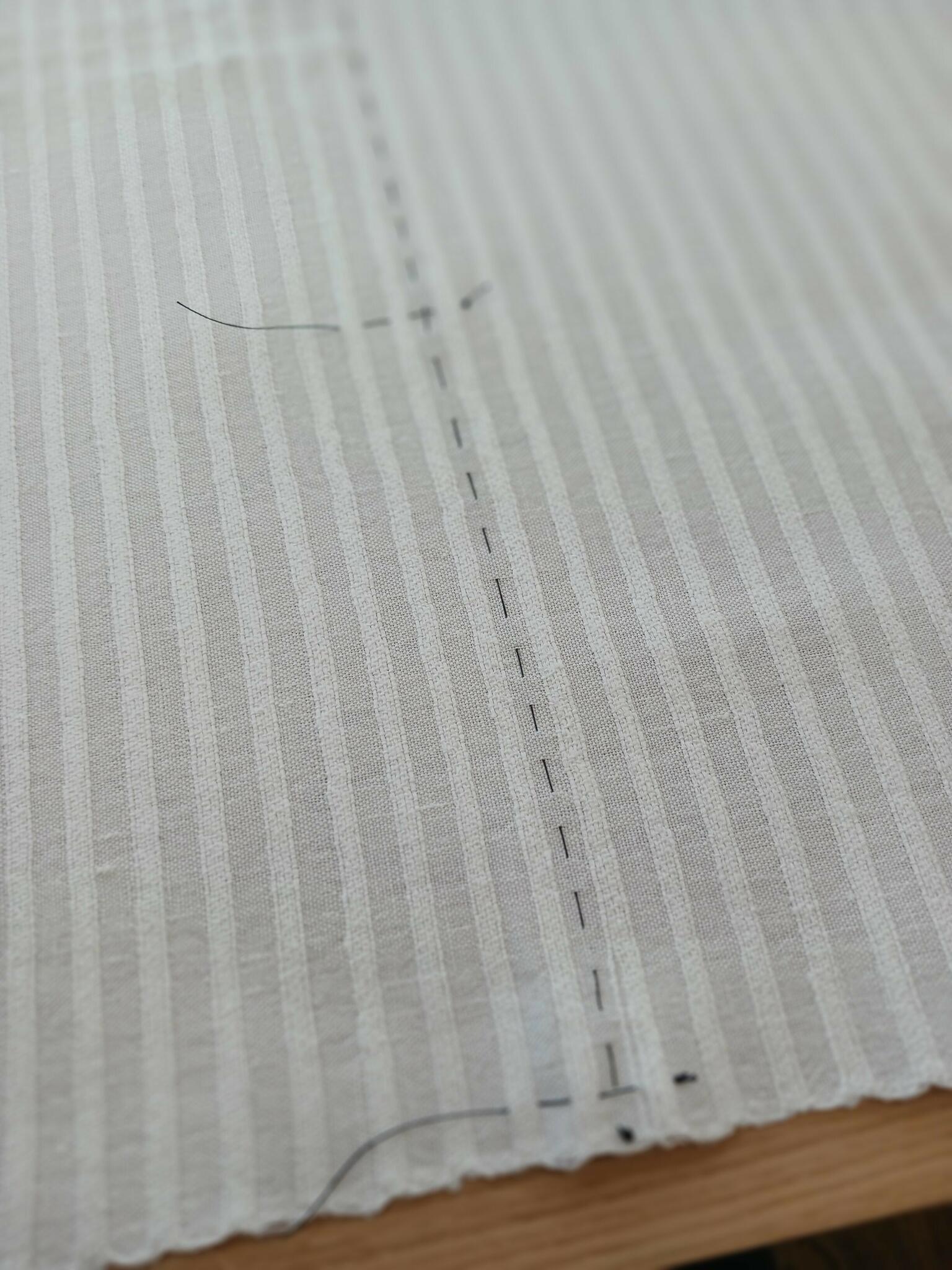
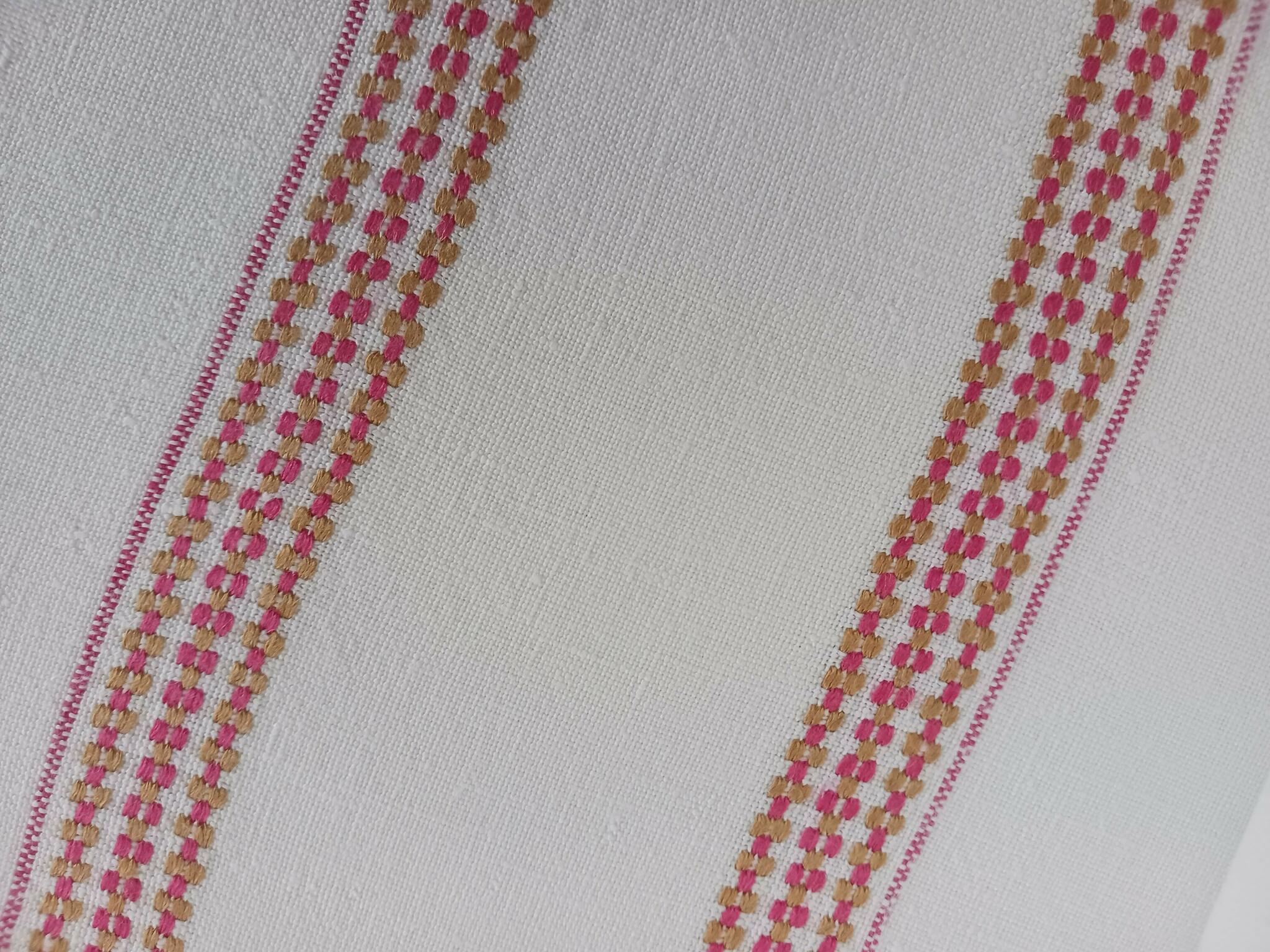
Throughout the research, reconstructed fabrics are continuously verified through direct comparison with original museum textiles. Practical garment reconstruction serves solely as a method of validating the woven fabric and the reconstructed weaving technology. The reconstructed textiles are evaluated by examining whether embroidery proportions, garment dimensions and overall fabric behaviour correspond to the original artefacts. Embroidery was carried out in collaboration with Kadi Vingisaar, while historical garment construction was undertaken in collaboration with Merli Mänd. As part of an entrepreneurial internship at IIDA Studio, Rick Rohtmets wove the apron (ERM 154) fabric under the supervision of Eva-Liisa Kriis as part of the technological reconstruction research.
Rather than reproducing individual historical textiles, this research seeks to understand the principles of historical weaving technology and to develop a systematic methodology for reconstructing historical Estonian linen fabrics. The results contribute to museum textile research, the interpretation of historical weaving technology and the preservation of Estonia's textile heritage through accurate technological reconstruction.
Research Outcomes
- Technological analysis of original museum linen textiles.
- Reconstruction of historical weave structures through experimental weaving.
- Determination of original warp and weft densities through repeated weaving trials.
- Investigation of the relationship between fabric density, embroidery proportions and garment construction.
- Experimental studies of fabric shrinkage, washing and finishing.
- Development of practical methods for bleaching, stabilising and straightening reconstructed linen fabrics.
- Continuous verification of reconstructed textiles through direct comparison with original museum artefacts.
- Development of a systematic methodology for reconstructing historical Estonian linen fabrics and interpreting their historical weaving technology.
Museum Textiles
- ERM 25 – Kodavere linen shirt
- ERM 154 – Kodavere apron
- ERM 3985 – Torma skirt
- ERM A 292:179 – Põlva headcloth (linik)
- ERM 147 – Kodavere headcloth (linik)